Thursday, March 28, 2013

Creating the environment

Reorganizing and decluttering continues.  Got a new desk to better handle the "business" of the family (including the homeschooling aspect).  ALSO got a new position where I get to work from home (at my new desk), which allows me to be home and more available to the kiddos and their home studies.  

Additionally, I've been mentally planning our extra garage space room conversion to a nice outdoorish sorta of space where the kiddos can be loud(er), more creative, and can engage in crafts, paints, and also have an additional space in which to study.  I would LOVE to obtain more shelving and create library of sorts in this space as well.  

First thing's first.  We have to relocate the animals that occupy the space.  

We rescued a stray puppy 1 year ago.  How do you NOT take a puppy, under the circumstances?  Give it a go.  But here we are, a year later, and I realize that the family is not too keen on this dog.  No one walks the dog, or loves on the dog.  The dog stays in the crate, our out in the yard alone.  THEN, in her boredom, she barks incessantly at random nothing...irritating the neighbors who subsequently call the cops!!  

I've been conditioned to immediately respond when the dog starts barking.  And back into the crate she goes!!  

Maybe because of the type of dog she is...or maybe because the lack of family interaction...the dog doesn't even come to us when we call her.  She sits and acts like she doesn't know who we are.  I took her to a dog park, out running, out the gate, and she just fails to even acknowledge the person calling for her.  

She's not aggressive at all.  And she's actually a great dog.  

Just not for our family.  

And they all know it.

So I found another family for her.

And now, we can focus on converting our room, decreasing distractions (imagine the huge distraction a barking dog, cops, and a frantic mom are to home-schooled kids!!) and reorganizing - creating a more ideal family situation for home-learning.


Tuesday, March 26, 2013

To Reed? Rede? Or Read?


"ee" sound is represented by:

ee (as in need)
ea (as in read)
y (as in baby)
e_e (as in here)

It's NO WONDER that kids can't spell! 


As recommended by The Well-Trained Mind, we've embarked upon the Phono Graphix Program....

...therefore, I've been reading Reading Reflex to help me institute our remedial reading program.  I'm completely done with the introduction and the "Getting Started" section, which was helpful and enlightening (albeit a bit repetitious for my taste).  

While I appreciate the emphasis on recognizing and appreciating that the letter symbols represent sounds (and not vice versa), I really didn't need her to spend an entire chapter making that point.  Also, I tend to not like it when authors spend an excessive amount of time explaining why their way is "right."  If I didn't believe in the method...I wouldn't have purchased the book.  And while I appreciate her offering an explanation (and giving some real life examples of real clinic patients and personal situations), again, an entire chapter is just too much time dedicated to this aspect - especially when I'm just eager to get to the nitty-gritty and start remediating my child(ren).

So I have *finally* arrived at Chapter 3 (and there are only 6 chapters in this 350+ page book!) - Teaching the Basic Code.  There are a few "pre-tests" and "simple" exercises in this chapter that I just HAD to try out on the children.  To my delight, both my 1st grader and 5th grader actually intellectually understand the crux of the premise:  letters are symbols that represent sounds.  And there are many symbol combinations that can represent the same sound.  

And to my delight, my pre-k was able blend sounds into words!!  

So now I'm going to go thru the chapter in an attempt to find a "good" starting place for both Ian and Haley (since they are the two who will undergo this homeschooling process first).  


Tuesday, March 19, 2013

Spanish victory


In preparation for more academic home-learning, Haley and I sat down to do a lesson...

...in Spanish!!

Our session was about an hour (longer than I anticipated but Haley was determined to "learn how to say something in Spanish" THAT night!!)  And in her eagerness, she became impatient.  I think she felt like she had my attention for only 10 minutes...and whatever she didn't master after 10 minutes would have to "wait until next time."  OR perhaps *I* would "get bored" or "discouraged" with her perceived lack of knowledge...and call it quits for the day.

And she REALLY wanted to "learn *something*" that day.

When we sat down, my idea was to teach her the basic idea of verb conjugation of regular verbs.  We went over "what a verb was" and the conjugations in English.  Then easily enough I explained the conjugation of 'hablar'

I - yo - o
You - tu - as
He/her/you - el/ella/usted - a
We - nosotros - -amos
They/you all - ustedes - an

She couldn't/wouldn't just memorize the various forms.  She had to know "why" and "what happens when" and "what if I want to say...."  Which is excellent, but was beyond the scope of what I was ready to teach at that moment.  I thought we'd sit down, and she'd memorize the above 5 lines...and that's it.

Her thoughtful questions took us on various tangents...
...and somehow we ended up *also* learning the Spanish alphabet as well.


After a few tears (hers) and a rising desperation (mine). I explained to her that we could work on this for as long as she wanted to.  She would be the rate-limiting factor...not me.  I stayed focus on the end-goal, and reflected back to my childhood home-learning days....


I recall feeling frustrated when I didn't understand adding fractions in the 5th grade.  I had a teacher (Mrs. Duvall) who didn't think I was very smart...and to "show her" that I "belonged in the smart kid group" I urged  dared taunted her to give me more difficult work (I proclaimed that I was much too smart for this "easy baby stuff").

So without teaching a single lesson in fractions (not one) she assigned me (only me) an entire page from the back of the math book.  I accepted the challenge proudly.  Got home.  Had no idea what a fraction was!!  (Crazy in 5th grade to not know what a fraction was, right?).

I remember crying as my mother tried to explain it.  (I had accepted a challenge, afterall.  There's NO WAY I could go back with my face in my hand and ever proclaim my intelligence, EVER, if I couldn't even master 5th grade math!!).  So when I didn't immediately understand, I felt like I would 'never get it'...that perhaps I was somehow not capable of understanding.  And...my educational journey would come to a screeching halt at that moment of confusion.  And I'd be relegated to the throes ignorance forever...and ever...

...and I'd live on the streets.  And never amount to nothin'...

But my mother persisted.  Maintained composure and told me "if you keep crying, I can't show you how to do it."  So I stopped crying.  And I learned how (and why) to find common denominators in 1 night...so I could go to school the next day a shining (intelligent) star.

Take THAT Mrs. Duvall!


(Back to Haley)

After our hour, Haley learned a basic Spanish exchange, the alphabet, and the sounds the letters make.  She knew how to conjugate a verb...and understood the idea that an adjective comes after the noun in Spanish.  And she was happy.  And I am excited that she could learn so much in such a short time from me...in a subject in which I'm no master!!  That renewed my confidence that together, we could make it thru.


Sunday, March 17, 2013

Hana ENFP

Extravert, Intuitive, Feeler, Perceiver


Top Ten Words That Describe Most ENFPs:

Sensitive ... Visionary ... Casual ... Idealistic
Energetic ... Spontaneous ... Imaginative
Insightful ... Gregarious ... Collaborative


IDEA GENERATORS, FUTURE-FOCUSED

ENFPs are “idea generators” much more than they are “detail people.” Often ingenious designers of “win-win” solutions that have a long term positive impact on people, ENFPs are a continuous source of  “out of the box” ideas. Exceptionallyoptimistic, ENFPs more than any other type believe that everything is possible. There are two phases of most projects or meetings: 1) the initial “big picture,” “vision setting” stage; and 2) the logistics or “action items” stage. Innovative visionaries, ENFPs shine during the former, gaining much more energy from envisioning future possibilities and idea generating then from completing concrete tasks. They tend to lose steam toward the end of projects when everything is decided and only the final execution steps remain, particularly when this involves handling details. ENFPs report that remembering random specifics is not a natural gift. As a result, they tend to rely heavily on copious note-taking for things like “action items” and logistics.


INSTANT RAPPORT, HIGH ENERGY

Insightfulhumorous, and highly energetic with “the gift of the gab,” ENFPs as a group tend to develop rapport with others faster than any other type. They intuitively “get” what makes others tick, and then swiftly and naturally adapt their approach accordingly. Their exceptional social skills, genuine warmth, passion, and infectious enthusiasm draw others to them. They spend a great deal of time connecting on a “personal level” in their work relationships, and maintaining a large professional network. ENFPs are “people” people who become drained by long stretches of time working alone. They need the stimulation of a collaborative environment to feel energized and to be able to “fire on all cylinders.” ENFPs think best out loud, and generate ideas most easily in group brainstorming sessions.


EMOTIONALLY INTELLIGENT, SENSITIVE

Staggeringly perceptive, ENFPs are one of the types MOST highly attuned to the emotional reactions of others (and their own feelings as well). Their insights into the emotions at play and motivations behind behavior are usually amazingly accurate. They naturally put others needs before their own, and often go well out of their way to maintain harmony in their relationships. ENFPs develop thicker skins over the course of their career, but generally they tend to take criticism personally, and may read more into feedback than was intended.


EMPATHETIC, GENEROUS, INSPIRATIONAL

Generous and empathetic, ENFPs have a special gift for leaving others feeling inspired and valued for their unique gifts. ENFPs naturally provide energetic support, appreciation, and positive feedback to others. As people who “aim to please,”  ENFPs feel a surge in motivation when they themselves also receive regular and genuine compliments. ENFPs love to inspire others to gain a new perspective and reach their maximum potential.  As the MOST idealistic type, they would rather err more on the side of giving others the benefit of the doubt, and thus usually meet others well more than half way.


CASUAL, SPONTANEOUS

Flexiblecasualspontaneous, and easy going, ENFPs love surprises and tend to leave their options open as long as possible. ENFPs might struggle a bit to stay organized, and they can be easily distracted from the task at hand.


Top ten: ENFPs are the type MOST likely to . . . 

  • 1. Develop instant rapport with a stranger
  •  
  • 2. Find that others readily share personal information with them
  •  
  • 3. Decide by involving others; value consensus
  •  
  • 4. Be seen as optimistic, idealistic and emotionally intelligent
  •  
  • 5. Follow their “gut” or hunches without concrete facts
  •  
  • 6. Build consensus
  •  
  • 7. Create a collaborative, team environment
  •  
  • 8. Be able to adapt their style to each situation or person
  •  
  • 9. See life as a fun adventure with endless possibilities
  •  
  • 10. Be a celebrity musician, talk show host, or theater actor

    https://type-coach.com/types/all

Ian ISFP


Introvert, Sensor, Feeler, Perceiver

Top Ten Words That Describe Most ISFPs:

Kind ... Private ... Observant ... Reserved
"In the moment" ... Quiet ... Unassuming
Sensitive ... Free-spirited ... Spontaneous


QUIET, PRIVATE, MODEST
Reserved, intensely private, and unobtrusive, it can take many encounters to get to know the incredible warmth, generosity, kindness, playful humor, and often impressive skill set of an ISFP. First impressions do not do them justice; ISFPs are the type least likely to “advertise” their own strengths. They are one of the mostsympathetic types who genuinely care about and enjoy people. However, being in highly social environments tends to drain their energy - they crave time inside their own head to process and recharge. As one of the least talkative types, ISFPs share a very small percentage of their opinions, concerns, or decision- making process. They tend to enjoy working behind the scenes in supportive roles that help people in concrete ways.


DETAIL-ORIENTED
Blessed with the gift of an exceptional memory for facts, trivia, events, and conversations, ISFPs are able to remember specifics better than most.  Highly practical, realistic, and action- oriented, ISFPs are much more inclined to “just do it” – rather then talk about it – and have a low interest in theory, analysis, future prediction or abstract discussions. They naturally excel at handling logistics or concrete tasks in the smoothest, most elegantly efficient way possible, with the least amount of complexity or wasted time.


SENSITIVE, KIND, PERCEPTIVE
Staggeringly perceptive, ISFPs are one of the types MOST highly attuned to theemotional reactions of others (and their own feelings, as well). Their insights into what others are feeling are usually amazingly accurate. Highly averse to conflict or tension, ISFPs focus a lot of energy on maintaining harmony and avoiding confrontation. As one of the more sensitive types, ISFPs take criticism very seriously (and often to heart), and tend to withdraw, not engage. Intensely private, they are the least likely type to share that they had a negative or hurt reaction, leaving others totally unaware of the damage done.


SPONTANEOUS, CASUAL
Spontaneous, casual, and comfortable with “winging it,” ISFPs often do their best work last minute with the pressure of the deadline upon them. Others find their easy going, relaxed style infectious. Calm, cool, and collected (at least on the outside) in a crisis, they are able to leap into action and efficiently troubleshoot when other types might be frantic. ISFPs are some of the most patient, flexible people, with a free-spirited, independent style. With a “live and let live” attitude, ISFPs are perhaps the least likely type to judge others, or try to offer unsolicited advice. ISFPs tend to becollaborative leaders, with very little impulse to take control or credit.
 

DRIVEN BY PERSONAL VALUES, KIND
ISFPs have strong personal values, and while they do not discuss them much with others, they have a large impact on the ISFP’s actions and decisions. They seek to feel that they are living their lives in accordance with their values and what “feels” rightto them. ISFPs care deeply about people, seeing something positive in everyone. They take great pleasure in tangibly contributing to the well-being and happiness of others.
 

OBSERVANT, KINESTHETIC
Keenly observant of their physical surroundings while living fully in the moment, nothing gets past an ISFP. They have excellent sensory awareness, and trust most what they can see, smell, taste, touch and hear. ISFPs are kinesthetic, “hands on” learners, who much prefer to learn by physically “doing,” as opposed to reading or listening. They also tend to have a creative streak and a great sense of aesthetics.


Top ten: ISFPs are the type MOST likely to . . .
1. Be sensitive to criticism
2. Tread lightly with others, particularly with sensitive topics
3. Be humble and modest, hardly ever "self promote"
4. NOT insult or upset others
5. Avoid conflict, or even tension
6. Desire a job outdoors
7. Not gravitate toward a desk job in the corporate world
8. See the best in others
9. Dislike public speaking
10. Not express negative opinions

https://type-coach.com/types/all

Saturday, March 16, 2013

Haley ENTJ

Extravert, Intuitive, Thinker, Judger

Top Ten Words That Describe Most ENTJs:
Take Charge ... Bold ... High-Energy ... Strategic ... Proactive

Confident ... Assertive ... Innovative ... Decisive ... Tenacious


ENTHUSIASTIC, CHARISMATIC, TALKATIVE
Enthusiastic, direct and charismatic, ENTJs are one of the most high energy,talkative types. They are typically very comfortable sharing about their lives and are much more likely than their INTJ colleagues to “think out loud.” Highly articulate, ENTJs have a naturally bold and dynamic presence that tends to command the attention of the room. Often their tremendous outward self confidence and excellent verbal skills draw others to them, but can at times overpower or intimidate certain personality types.  ENTJs are the type that have to work the hardest to not interrupt others (usually in an effort to fight for “the floor” or avoid hearing excessive details).


INTELLECTUALLY CURIOUS, DEBATE TO UNDERSTAND
ENTJs have a strong need to be constantly learning and challenging themselves. They thrive when they are continuously working towards higher levels of competency, and are easily bored by assignments or tasks that they have mastered. Intellectually curious, ENTJs learn by challenging others’ positions, expecting them to defend their positions for the benefit of better understanding both sides. They tend to respect others who can argue their position.


BIG PICTURE PROBLEM SOLVERS
There are two phases of most projects or meetings: (1) the vision and strategy-setting stage and (2) the execution stage. Unlike their ESTJ colleagues, ENTJs tend to gravitate towards the former. Highly future focused, out-of-the-box, logic-driven thinkers, few can match the ENTJ’s capacity when it comes to doing what they love - developing long-term strategies or solving complex problems that involve a lot of moving pieces. ENTJs’ minds are unconventional and unrestricted by previous approaches or traditional thinking.


STRATEGIC VISIONARIES
ENTJs are driven more by logic than personal values. They don’t necessarily check in with their own emotions when making decisions, and can at times overlook others’ emotional reactions. Strategic visionaries, ENTJs excel at objectively analyzing and planning for the long-term needs of an organization. Much less sensitive than their ENFJ colleagues, ENTJs usually would rather be “right” than be “liked,” and can be very direct (to the point of being blunt). They tend not to “sugar coat” their feedback or reactions as much as other types, in order to not detract from the clarity of message.


PERFECTIONISTIC, FOCUSED, "TAKE CHARGE"
ENTJs drive for closure quickly and are some of the very fastest decision makers on the planet. “Good enough” is not typically part of the vocabulary of an ENTJ.  They have extremely high standards for themselves, as well as a tremendous stamina forhard work. ENTJs tend to hold others to the same high standards and work ethic that they expect from themselves. As one of the most proactive of the 16 types, they don’t wait for it to all “work out”…they MAKE it all work out! ENTJs constantly push themselves to achieve excellence in all of their endeavors, which often translates into long hourswith more focus and fewer breaks in concentration than most other personality types.  Natural born leaders, ENTJs have no problem taking charge in a group of people without a leader, even among new people or environments.


Top ten: ENTJs are the type MOST likely to . . .
1.  Fight for the floor
2.  Be a workaholic
3.  Be seen as assertive, bold and/or confident
4.  Have LOTS of energy
5.  Move up the corporate ladder quickly
6.  Make big decisions quickly
7.  Finish others’ sentences
8.  Become impatient with a lot of detail
9.  Be a natural-born leader
10. Intimidate or overpower others

https://type-coach.com/types/all

Daddy INFP

Introvert, Intuitive, Feeler, Perceiver


Top Ten Words That Describe Most INFPs:
Sensitive ... Caring ... Empathetic ... Flexible ... Casual
Spontaneous ... Reserved ... Modest ... Calm ... Unique


UNIQUE, CREATIVE, UNCONVENTIONAL
There’s no doubt about it, INFPs are unique. They lead their lives according to an inner compass that can often lead them off the beaten path and in their own direction. INFPs are also gifted with a creative spark that allows them to generate new, unconventional and even revolutionary ideas. Their thoughts and ideas are frequently focused on people, and they have an easy time relating to - and understanding - their fellow human beings. In fact, INFPs often appear to have an x-ray vision into the inner-workings of other people. Most successful INFPs attribute success to an innate ability to flex their style to meet others more than halfway. This makes them naturals at effective communication, and they are usually considered to be excellent listeners – rarely judging, just seeking to understand.


BURSTS OF INSPIRATION
Flexible, casual, spontaneous and easy going, INFPs like to leave their options open as long as possible. It is not uncommon for them to struggle to stay organized, and they can be easily distracted from the task at hand.  Luckily, they actually prefer to prepare rather last minute when the urgency is high. INFPs tend to work in bursts of inspiration and take a lot of mini-breaks, rather than steadily throughout the day or week. They tend to be very flexible and open to changing plans last minute.


IDEA GENERATORS, VISIONARIES
INFPs are “idea generators” much more than they are “detail people,” and they love to discover “win-win” solutions that have a long- term positive impact on people. There are two phases of most projects or meetings: 1) the initial “big picture,” “vision setting” stage; and 2) the logistics or “action items” stage. Innovative visionaries, INFPs shine during the former, gaining much more energy from envisioning future possibilities and idea generating then from completing concrete tasks. They tend to lose steam toward the end of projects when everything is decided.


DRIVEN BY PERSONAL VALUES
INFPs have very strong personal values, which have a large impact on their actions and decisions. They seek to feel that they are living their lives in accordance with their values and what “feels” right to them. Unlike their INTP colleagues (who are exceptionally logic driven), INFPs are uncomfortable making decisions based predominantly on impersonal, logical analysis. INFPs trust their hunches more than most, and have a tendency to read between the lines of what others are saying more than any other type.

CALM, RESERVED, SYMPATHETIC
INFPs tend to have a relaxed outward appearance that has a calming influence on others. Reserved and modest, INFPs are not likely to “advertise” their own strengths, and it can take many encounters to get to know them. First impressions do not always give a sense of their incredible warmth, generosity, and kindness.


DEEP INNER WORLD
Inside the mind of all INFPs is a rich, well-developed inner world that they tend to keep rather private. They are one of the most sympathetic types, who genuinely care about and enjoy people, and strongly value their relationships. Being in highly social environments tends to drain their energy, and they crave time inside their own head to process and recharge. With those in their “inner circle,” INFPs show a much more talkative, passionate, and enthusiastic side.
  

Top ten: INFPs are the type MOST likely to . . .
1. Read between the lines
2. Have a “sixth sense” at times
3. Follow their hunches; make decisions based on what “feels” right
4. Value uniqueness and originality in themselves and others
5. Reflect on who they really are, and on the meaning and purpose of life
6. Do work that has personal meaning for them and betters others’ lives
7. Have a calming influence on others
8. Not follow “the pack”
9. Enjoy an assignment with maximum creative license
10. Give others the benefit of the doubt

https://type-coach.com/types/all

Mommy's Personality INFJ


Introvert, Intuitive, Feeler, Judger


Top Ten Words That Describe Most INFJs:


Empathetic ... Visionary ... Perfectionistic
Value-Driven ... Conscientious ... Planful
Private ... Reserved ... Idealistic ... Sensitive


CREATIVE PROBLEM SOLVERS, IDEA GENERATORS
INFJs are “idea generators” much more than they are “detail people,” and they love to discover “win-win” solutions that have a long term positive impact on people. There are two phases of most projects or meetings: 1) the initial “big picture,” “vision setting” stage; and 2) the logistics or “action items” stage. Highly intellectually curious, INFJs shine during the former, and gain much more energy from “noodling” abstract concepts and ideas than doing straightforward detail-based execution. They spend more time than most reflecting on the complex nuances or shades of grey in issues. While they are perfectionists with exceptional work ethics, INFJs report that remembering concrete details shared verbally is not a natural gift.  As a result, they tend to rely heavily on copious note taking.


RICH INNER WORLD
Inside the mind of all INFJs is a rich, well developed inner world that they tend to keep rather private. While they enjoy socializing and highly value relationships, an INFJ’s energy is quickly drained by highly active, social environments. Their best ideas come after they’ve had time to mull over the topic in their head for a while. This“percolating” process can take a couple of days, is not always conscious, and usually leads to a solution that just “pops” into their head.


EMOTIONALLY INTELLIGENT
Highly emotionally intelligent, INFJs love to inspire others, help them gain a new perspective, and reach their maximum potential in life. They tend to feel things very deeply and be sensitive in every sense of the word. With a particularly low tolerance for conflict, INFJs work to avoid unnecessary tension or confrontation, and are more likely than most types to take criticism personally. INFJs tend to spend a great deal of time preparing for and then reflecting on any negative interactions, and also tend to second- guess their decisions.


PERFECTIONISTIC, FOCUSED, CLOSURE-ORIENTED
“Good enough” is not typically part of the vocabulary for the INFJ. Blessed with tremendous focus, will power, and perseverance, INFJs constantly push themselves to reach any goal they have set out to achieve. Striving to avoid “winging it” or surprises, INFJs find lack of closure and future “unknowns” to be more anxiety-producing than most types. As a result, they prefer to plan way ahead, and over-prepare whenever possible. Not natural multi-taskers, INFJs tend to do best when focused exclusively on one conversation or task at a time.


QUIET, RESERVED, SERIOUS
Private and reserved at first, INFJs are perhaps the type that is the most difficult to judge by a first impression. Only as part of their inner circle do you really get to know the warmth, passion, insight, empathy and witty humor of an INFJ. While they can sometimes come across on the serious (and even a bit unapproachable) side at first, the more time you spend with them, the more you grow to appreciate the depth of their wisdom and insights about both people.


AVID READERS
INFJs tend to be avid fiction readers, as this pursuit provides INFJs with much needed recharge time. They likely see themselves in many of the main characters, who are often INFJs, as fiction novel authors are commonly INFJs. To the rarest type(approximately 2% of the population), always on a quest to better understand themselves,  this is both appealing and validating!


Top ten: INFJs are the type MOST likely to . . .
1. Be highly ethical with exceptional integrity
2. Virtually never compromise their personal values
3. Treat each individual differently based on their needs/personality
4. Be too hard on themselves; perfectionistic
5. Seek spiritual fulfillment
6. Feel anxiety and worry about future “unknowns”
7. Find it difficult to stay focused on the present moment
8. Aim to know themselves as deeply and thoroughly as possible
9. Leave an organization based on lack of shared values
10. Take criticism to heart

https://type-coach.com/types/all

Friday, March 15, 2013

Introvert? You talkin' to me?

One of my latest new interests is the concept of personality.

While visiting friends for the Superbowl this year I found a random magazine lying around.  Not being a super fan of football, I was easily distracted by this very short magazine personality quiz.  The results of the quiz revealed that I was an introvert.

As a long-time, outgoing, social, friendly, talkative person I've long thought of myself as an extrovert.  But sometimes it's easier to "see" other people for what *they* are than to analyze yourself.  So I made my friend take the quiz too.  The quiz had her accurately pegged as an extrovert.  

So I asked her to provide feedback regarding her responses....

...and, behold, we were indeed opposites.

I always thought we were "the same."  Now, it is revealed that we are...exact/total/complete opposites on how we felt most comfortable interacting in the world!!

Imagine that!

Even other people say we "act alike" or "and look alike" and "have similar energy."  But, when she and I compared notes on our comfort level in social settings, our preferred method of solving an issue, or our most effective coping mechanisms...it was clear that we were NOT the same.

So this motivated me to dig deeper and investigate further.

What I discovered from Wikipedia is:
Extraversion is "the act, state, or habit of being predominantly concerned with and obtaining gratification from what is outside the self"

Introversion is "the state of or tendency toward being wholly or predominantly concerned with and interested in one's own mental life"


This realization made me re-think everything I thought about personalities and...about my own self.  

And once I moved beyond my own self...I started considering those around me (and my potential mis-understanding of their personality).

So, the entire family underwent personality profile quizzes so we could all better understand each other (and everyone else).  See links in side-bar for more info.  


Thursday, March 14, 2013

Social life of Our Haley

"When children go to school to be with one another, they are primed only to learn enough to not stand out...Other than that, learning is irrelevant and can even be a liability to peer relationships."

"Anxiety also comes back to haunt peer-oriented learners. Because peer attachments are inherently insecure, anxiety often becomes a chronic condition. Peer-oriented kids are among the most agitated, perpetually restless, and chronically alarmed."

"The authors pointed to well-regarded research showing that 12-year-olds who preferred spending free time with their parents rather than gravitating to their peers. . . demonstrated many more of the characteristics of positive sociability. The kids who spend the most time with one another are the most likely to get into trouble."


This is very interesting to me because...as soon as I decided to pursue this new course of action of homeschooling, I found that I was less stressed and anxious about "saving her from being ostracized "  

"Did you put on deodorant?  If you don't, the kids at school will start talking about you!"  

"Are you wearing *that* today?  That's too raggedy...the kids will start talking about you!"


As so aptly pointed out by Haley, herself:  

in the one hand I (Mommy) am trying to instill the importance of individuality, self-determination, and avoidance of peer-pressure into her persona.  

And in the other hand...I KNOW how cruel girls (and children in general) can be towards one-another (especially if there are 'obvious differences').  And the last thing I want for my daughter is to be singled-out, picked-on, and made to feel inadequate in peer groups.  That's no fun!!   

I openly admit, it is indeed very schizophrenic!! 

Every week Haley shares with me a story about a "friend" who is no longer a friend due to some random reason that makes no sense.  One day her BFF is texting/calling her every 10 minutes.  Stark contrast to this entire week of spring break (it's Thursday) where she has not had one friend request an outing, not one call/text/email, nor has SHE talked about any of these supposed BFFs.  

At the very LEAST, this social circus is extremely *distracting.*  More probably...its very *harmful.*  This impressionable time establishes the foundation for all future relationships and interactions.  And in her world, everyone is an individual.  And individuality is NOT appreciated among middle-schoolers (or high-schoolers...or in many ADULT social situations).  How can I expect my daughter to focus on education in an environment where her talents and individual human attributes are unappreciated by everyone at the school?

As the chronic "outcast" among school-peers, a child either turns out to be brilliant and successful beyond words...OR...they decompensate and become "a problem" and gravitate towards gangs (and other "outcast groups")...or (lacking the wherewithal to withstand the peer-pressure or are unable to visualize a future of happiness) they self-destruct !  

So...

Instead of worrying about "socialization with peers," and establishing these "superficial, unstable, chronically agitating peer 'relationships' "- perhaps focusing on building meaningful relationships, period, are better for a child.  


And that relationship begins at home - with Mommy and Daddy.  

Wednesday, March 13, 2013

Preparation/Remediation


As we prepare for our transition, my mind is overflowing with ideas.

Ideas to redecorate our "bonus room" to be more "studious."  De-clutter and reorganize the space, making room for books, craft table, computer area, and storage.  I have ideas about outdoor projects, such as gardening, and working with our animals.  I have ideas about field-trips, and activities...

I also have ideas about implementation of curricula.

The Hybrid School utilizes a Classical Education Curriculum.  So I've been reading A Well-Trained Mind to get an idea as to exactly what this entails.

As I become proficient with this method, I will share my thoughts and our implementation adventures.  But for now I'm going through the curriculum (starting with 5th grade) and pulling out potential areas of deficiency so Haley will not be "behind" in key areas in the Fall.

Of note, this Curriculum endorses teaching 2 foreign languages - an ancient language like Greek or Latin (which is a huge part of English roots) and a 'modern language' such as Spanish, French or Italian (which also utilizes Latin roots, which eases learning).  Hubby *also* feels quite strongly about the necessity of speaking a foreign language.  Initially he was pushing for German...

...but no one speaks German.  Not even Germans.  :)

He was reluctant to choose Spanish because "that can be learned on her own."  While I agree that Spanish is the "unofficial" second language here in the United States, and therefore ubiquitous...

...that is the VERY reason I think the kids should study it.  It's relevant, and opportunities to master the language are plentiful (unlike French or Italian here in Texas).

So I'm going to push for Spanish.

And I think we may as well try Latin too (why not, right?)

Haley is a very strong analytic thinker (so math and science she seems to pick up quickly).  However, her reading is not that efficient (making it "not fun" for her) and her spelling and vocabulary could use a pick-me-up.  So, in accordance to the Classical Education, I'm going to start supplementing spelling/vocabulary, and reading exercises.

So for 5th grade we will:
Begin Latin
Begin Spanish

And as necessary (PRN)
Remediate Reading
Remediate Spelling
Remediate Writing

I'm doing this by looking over the required book list for The Hybrid School for 5th and 6th grade to see if I should order anything early to give Haley a head-start. There were no books on the list that I wanted to order *early* but The Well Trained Mind did have some 5th grade suggestions on curriculum that I know Haley is missing out on now....and could use additional practice in:

Such as reading, spelling, and writing.  Additionally, it is suggested that she start an ancient foreign language (such as Greek or Latin) so I decided on Latin since all of medicine is based on Latin...

....so to get her started I ordered:

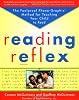
Reading Reflex: The Foolproof Phono-Graphix Method for Teaching Your Child to Read   Spelling Workout (Student Edition) Level F  Wordsmith Apprentice: Writing Excellence Through Unique, Skill-Buidling Exercises for Grades 4-6   Latina Christiana I Set

For her modern foreign language, Spanish:


For music she'll continue harp and piano.  AND her Piano Teacher is considering adding a homeschool music theory option in line with obtaining American high-school AND college credits via Trinity College in London.  I'm sure other local homeschoolers will want to take advantage of this option.  Once we begin school...I will discuss this with the director!!

For Religious Studies, we'll continue going to Unity.

And in the school next year, we will probably continue supplementing the above since the class time is focused on math, science, writing, history/literature (humanities) with the expectation that parents supplement to a large extent anything NOT covered in school.

And that's exactly our plan as per The Standard Classical Education Curriculum.


Saturday, March 9, 2013

Buying a Piano


Shopping for a piano is not for the faint of heart.  We started down this path about a month ago when Haley's piano teacher pegged her to have *real* talent and explained the necessity of a "real acoustic piano."

Acoustic pianos are important because they offer a musical experience unmatched by even the best digital pianos for the aspiring professional. We have a digital piano (a Yamaha Clavinova), and while it is good for a back-up practice piano, it has become insufficient for our pre-professional.

What an honor to have someone so talented invested in the success of our daughter!

So, with the support of my mother, we set out to find our baby girl the very best piano that we could buy (within our budgetary limits, of course).

I spent about 12 hours doing internet research.

First you have to set your budget.  

Pianos range from $2000 to over $100,000.  So there's an option for every price point.

Then you decide new vs. used.  New has the advantage of being "new."  So a purchase is solid and you know what you're getting.  Disadvantages of 'new' is the necessity of "extra" tuning sessions as the piano 'settles'.  Tunings can cost about $150 per session.

However a major advantage of buying new is...you don't have to worry about bringing a piano technician along with you to double-check the mechanism, sound board, and overall condition of the instrument.  It has a warranty, and all parts are new.  Knowing this, is a huge stress relief!  Imagine spending $5K on a used piano only to discover that the soundboard is faulty...and it's only *worth* $1500?!!

Then you decide grand (horizontal) vs. upright (vertical).  

Considering your floor space, and the size of your room, one type may be clearly more beneficial.  The key consideration is the length of the strings.  The longer the strings, the richer the sound.  And any "real" student should endeavor to obtain the longest, richest strings possible.

Typically a great quality upright can be purchased for the same price of a mediocre grand.  So if money is an issue (and when is it NOT?) you can get longer strings (and better quality) with an upright in the entry price-points.  Starting price of a great upright may be about $4500, while same quality in a grand might start at $10K.  But for $10K, you can get a super spectacular upright....

When purchasing an upright for a serious student, you want to avoid spinets and consoles.  They are too short, their strings too short, and do not create deep/rich sound.  The smallest upright for consideration should be 44" and is considered a studio.  

However, if you're interested in purchasing a used piano, you may find a great deal on a good grand...or even find older "high-end" upright for a great price.  But, if you go 'used'...you'll need to have a piano tech in your pocket to make sure your purchase is solid.  And piano techs are not free...

We decided to focus on brand new uprights that were 44" or taller.  We didn't want a piano made in China.  Our piano instructor was with us and tested the mechanisms, responsiveness, volume, brightness, tightness, heaviness of the keys...and the overall "feel" of the piano.  And we wanted the price to be right around $5,000.  

I will admit that when our daughter tried a 50 year old Mason Hamlin (an American top-of-the-line upright that retails new at over $20,000 but was on sale used for about $5K) and said "it sounds old, and slightly out of tune..." I was impressed that she actually had an opinion.  Of course this piano is for HER, and we want her to be excited about it...and WANT to play it.

We moved on to a used K.Kawai grand ($5900), to which my daughter's evaluation was:  "it's too legato...when I play staccato, it doesn't seem to register...the sound is too sustained"

Okay.

What about this used Yamaha grand ($7500)?  "Well, it doesn't react.  See, I'm playing the A...and you can't even hear the A note that I'm playing..."

Alrighty then.  (Glad to be "off the hook" from choosing a grand)

Time to consult with the her professional piano teacher that, by this point, had met us at the gallery.

And he agreed.  The bass on the used K.Kawai grand wasn't "rich" enough. The mechanism on the Yamaha grand was "too loose...".  The used Mason Hamlin upright was "too old" and the "voice" of the piano was not bright enough to capture the interest of the child..."

And so forth, and so on....

So we left and went to our next stop, which happened to be a Yamaha and Kawai dealership.

Honestly, during my internet research, I had become partial to the Kawai and the Yamaha.  There are thousands of piano brands and even MORE models of said brands.  The decision is daunting!!

I was hoping that we'd find a Yamaha U1 or Kawai K5 (both about $9K) for a "great deal" within our budget.  I was even willing to consider a used instrument (if I could get comfortable with uncertainty regarding the possibility of future "issues/problems" down the road) if the price was right on one of these "higher-end" entry professional uprights....

We essentially "ruled out" based on price:
C. Bechstein ($20K for upright)
Steinway & Sons ($23K for upright)
Bosendorfer ($46,440)
Mason Hamlin ($20303)
Sauter ($25446)
Seiter ($20200)

We dreamed about obtaining a Japanese (i.e. NOT an Indonesian or Chinese) Kawai or Yamaha - which come in between $8-14K.  There ARE other Kawais and Yamahas that are good...but their countries of origin are less clear.  And in our attempts to stick with European, American, or Japanese-made instruments...

...we were limited to the upper-end of the "middle range" of Kawais and Yamahas.

Our top contenders were:
Kawai K2 vs Yamaha P22 vs Yamaha B3
Kawai K3 vs Yamaha P66
Kawai K5 vs Yamaha U1

When we arrived to the Yamaha/Kawai dealership we had the opportunity to choose between every piano on our preconstructed "list" which I complied based on my internet research.  

We saw a Yamaha U3 (step above a U1) retail new at $11000, used for about $5500.  Good deal, right?  But the piano teacher was not impressed with the "stickiness" of the keys...

We saw a Yamaha U1 new (retail $10,199 for "sale" at $9873).  Nice piano, but over budget.  The Yamaha P22 seemed nice enough to me (at about $5500) but the piano teacher said:  "this is something for an elementary school auditorium."  We did not see any Kawai K5s.  But the piano teacher fell in love with a Kawai K3.

Kawai K3 is made in Japan.  Retail $9119 for "sale" at $6964 (+tax/delivery).  The "lesser" Kawai K2 was only 45" tall, but was $6262 (on "sale" for $4782).  I was pushing for the K2.  Afterall, are those 3 inches *really* worth over two thousand dollars?

To which the piano teacher responded...."but it's 3 inches on *each* string..."

So I guess that's a "yes."

We realized that the K2 is NOT made in Japan.  And, per the piano teacher...."the mechanism on the K2 is unstable and the keys get stuck quite a bit.  The sound is not subtle and rich, and they give technicians lots of trouble."

So it came down to a Yamaha B3 (which is made in Indonesia and is therefore sub-optimal because quality is inconsistent between instruments), a Yamaha U1 (which was way more expensive, and "overpriced" than it needed to be based on performance structure)....

...and a Kawai K3.

After 5 hours, 2 piano galleries, 10 hours of internet research, and 2 hours of conversation with the piano teacher and others, input from Haley, considerations of size, cost, and value....

....we chose a brand-new, upright, polished ebony Kawai K3 which retails at $9119.  It's 48" tall, made in Japan, and has a 10 year transferable warranty, delivery included, and half-off tuning for 2 years.  Sold to us for less than $6400 total (tax included).  Making this a fantastic deal!! 

Kawai K-3 Professional Upright Piano


Congratulations Haley!  Thank you Piano Teacher!!  And thank you Grandma Holla!  Every-time she plays beautiful music on her piano, she'll think of you.  One day, when HER child begins piano lessons on this instrument...she'll remember this day.  And every-time we applaud her musical successes and accomplishments...we'll thank you all over again!


A couple of wonderful websites for information include:

The Blue Book of Pianos - while the prices may not be totally up-to-date they have a comprehensive list of options and their relative price to each other.
http://www.bluebookofpianos.com/pin.htm 

http://www.pianoworld.com - offers forum-like feedback and real-life advice and comparisons and information for shoppers and musicians.

http://www.pianobuyer.com/publication.html - is a very useful guide and instructional that offers practical information that is essential to choosing a piano.


Friday, March 8, 2013

Ian and Kung-Fu

Speaking of the realization of the importance of specialization...

It's already been shared that Haley is a musician.

Well, Ian...remains a work-in-progress.  His passions include insects, airplanes, dragons, video games (that consist of dragons and insects)...and drawing.  And packing those interests into a "nice solid bundle" of an activity alludes us.

So, we tried music, various sporting activities, camps, and art-schools.  We realized he did NOT like contact sports or rough-housing...so tried horse-back riding and swimming.

Horseback riding was "too hot" and swimming made him "too cold."  Baseballs are "too fast" and he's too slow to be a runner.  He doesn't like to climb and is afraid of heights, and has no interest in being apart of a team.  He has "heavy bones" and the bulk of his muscle mass lacks "fast twitch" components.  He's not particularly agile, and he doesn't "think quick on his feet."

With his love for playing video games and reading/drawing, I wanted to get him up and moving.  While I appreciate his lack of enthusiasm for "team sports" I think it's important to learn how to collaborate and interact with others.

So we decided that Ian should do martial arts.

But which martial art?

***

We considered a very wide range of possibilities  realizing that our son has distinct preferences and many natural abilities.  He's NOT a fighter, so we had to stay away from "fightclub-like" studios and techniques.  He's not into sparring, and is not a great/coordinated climber.   He's intellectual, and thoughtful - so a rich history and meditation quality would fit him well.

I took an online quiz on his behalf.  And we did quite a bit of research on the various types.

If you are older or not very acrobatic, Wushu (China) probably isn't for you, but Tai Chi (China) might suit you nicely. Furthermore, recognize that striking martial arts like Karate or TaeKwonDo may or may not be well-suited for smaller physiques. The grappling styles of Judo, Aikido, or Jiu-Jutsu, while being close-combat styled martial arts, emphasize technique and leverage and therefore become more readily useful as you progress. Likewise the combative Chinese styles are all about technique and are less dependent on your being a particular height or weight to succeed.


I asked good friends of mine, such as Dr. Robert Myles and Dr. Kristopher Rinehart for their feedback as martial arts experts.  And we called every studio within a 10 mile radius of our home (nearly all of them tae kwondo).


Taekwondo vs Kung-fu:

Movement Styles


Weapons


In the end (for multiple reasons), we chose kung-fu for Ian.

Kung fu/Kungfu or Gung fu/Gongfu (Listeni/ˌkʌŋˈf/ or /ˌkʊŋˈf/功夫Pinyin: gōngfu) is a Chinese term referring to any study, learning, or practice that requires patience, energy, and time to complete, often used in the West to refer to Chinese martial arts, also known as Wushu

It "fit" his personality best (historical, culturally), physically he has the ability, and the kung-fu studio nearest us had a wonderful mix of diversity and complementary energy.  Obtaining a black belt isn't something an 8 or 10yo kid does on a regular basis (unlike in tae kwondo where you have all these little kids running around with black belts), so it requires diligence and time (which is perfect for Ian's personality type).


The closest kung-fu studio we found is 3 cities over.  So we make the drive twice a week so he can participate.  And it has been great!!

Specialty vs. Recreation

As a more sophisticated parent (thanks to Mothering Haley) it doesn't take as much time, effort, or money to realize whether or not an activity that occupies your child's time is "worth the trouble."  Sure, broad exposure  to various sports/instruments/extra-curriculars are beneficial.  But too broad of an exposure is useless and frustrating.  And even "very broad" becomes more expensive and labor intensive than it's worth.  Choosing a "specialty" for your child early yields the highest return on that investment.  And certainly resisting the urge to "waste" time and money on "expensive, organized play-time" frees up family resources that are better invested in...

...something that will likely carry the child through to adulthood with an added 'lagniappe'.  It is this 'specialty', 'hook', or 'lagniappe' that will make them competitive for anything they apply for in the future (college, scholarships, jobs).  It is these activities that should comprise the bulk of the child's dedicated *scheduled* "extracurricular" time, since the more devoted they are to developing their niche', the more developed their niche' will be.

And this specialty should be something in which they are interested, AND have the ability to excel (physically, mentally, emotionally, spiritually).  No sense it "wasting time" forcing a child with no rhythm into a dance class.  Even if THEY think they want to dance...as the parent, it is our responsibility to help them choose activities in which they are more likely to succeed.

This is NOT to say that a child with no rhythm CAN'T learn to dance, and/or shouldn't be allowed to try.  Just enter into the studio with a realization that they would have to overcome a natural deficit in order to compete and be considered top tier...and with that 'handicap' comes additional struggle, time, money, and in the end may not be enough to reap the "reward" of being a 'specialist.'  And the ability to recognize this fact makes things much less stressful because you can appropriately allocate resources to a given activity.

Anyway, after going through multiple activities with Haley, we realize a lot of frustration could have been avoided had we:

1) Offered her recreational/fun activities (low cost, low commitment) when she was a very young child with no expectation that she develop the necessary skills to be "good" at said activity, but rather just offer exposure and good times.

2) Then, as she matured and her strengths and preferences became apparent, begin focusing on those and deprioritize all the other activities that may be simply serving to distract from her specialty.

Our mistake was, we spent more money and were more "dedicated" than we should have been very early on in the "trying out" period of an activity.  So with Ian, we allowed him to participate in a few recreation activities, but didn't feel the need to force him.  And when it became clear that he had no interest, or little natural talent in a particular area, we didn't dawdle...

We are "smarter" now!!