Everyone knows that great photography begins with a good basic camera. Scored this Nikon D40 DSLR off Ebay for a small fraction of the price new ($500).
Tuesday, April 30, 2013
Photography
Everyone knows that great photography begins with a good basic camera. Scored this Nikon D40 DSLR off Ebay for a small fraction of the price new ($500).
Labels:
Curriculum in action,
Ian
Saturday, April 27, 2013
CPR Training
As apart of a well-rounded, practical, useful, thoughtful, relevant educational program, we arranged for the children to learn CPR. What a fabulous day we had learning about the ABC's of emergencies in preparation for life.
In an adult, call 911 first (because a defibrillator is typically very useful, and ultimately the only way to possibly save their life is with advanced medical intervention).
And this is a AED. There are 2 patches that go on the anterior chest wall. The electricity is designed to go through the heart to help abolish abberrant rhythms and help the heart return to a state of allowing a spontanous and effective circulation.
Choking intervention. Just above the belly-button, try to force a foreign object out of the mouth with abdominal thrusts just under the rib-cage.
In infants, do CPR first. Cover nose and mouth with your mouth. Use only 2 fingers for compressions. If all else fails, be sure to do compressions at least.
And we conclude with infant choking intervention.
Labels:
Curriculum in action,
Haley,
Hana,
Ian
What does Haley think about going to homeschool?
Readers of this blog know the my impetus for treading down this homeschool journey was Haley. We've been blessed with great elementary school teachers so far. Yes, Haley has been in 7 schools in her 10 years on this Earth...but each move was designed to remedy a certain undesirable situation. And then, I (finally) realized...that perhaps there isn't a (traditional) school that will optimize Haley's potential in all of her ENTJ glory as a true natural born leader. (Because we know that leadership is not a desired attribute in school where conformity is expected and encouraged).
Going through the past.
First there was the hole in the wall pre-school. Very mom and pop in a traditionally decent part of town. We chose this spot because our 1st baby was going to day-care (at age 1) and this seemed to be close to a "home-like" environment. But, times change. And the "good part of town" apparently no longer included this school. After the gun-man episode, we were out.
And yes, we overcompensated by putting the (now 2 year-old) child in the most bourgeois Montessori school on the rich side of town. This school (in all of their Montessori-do-whatever-you-want-to-do splendor) left my child undisciplined and crazy-rowdy.
So the following year we decided that we like the "child centered" aspect of instruction, but with RULES and guidelines. So we went back across town to the Hippie tie-dye school where she actually thrived (although I'm not sure she actually learned anything distinctly academic which was disappointing). But that was okay because she was from ages 3 - 4)
Then we moved 400 miles north. So we used my mother to help us pay for a College Laboratory school. Haley was now a 4yo *pre-K* student and I liked the thought of it being on the college campus, and the energy student teachers bring. But, it was too expensive (and ultimately too far from home after we finally settled into our new house).
So we opted for a less expensive, very close to home, Christian school to begin kindergarten (with the thought that we'd be able to settle down here and let the kids come up thru this school). We loved this school. The teachers were great, and Haley was accepted and seemed to thrive. But, the school was only an elementary school, and there weren't any real options (practical inexpensive options) for her after she 'graduated' from this school. She stayed at this school for kindergarten and 1st grade.
With now 3 children to consider, we decided to move again to a place with lower cost of living and higher rates of pay and bountiful job options. And we chose our house because of the local Public school system. 5 stars. Exemplary. Parent involvement.
Haley stayed at this Public school for 2nd - 4th grade (the school which Ian attends and Hana will be enrolled). And this was great for her. Sure, I think she could have learned more. And I absolutely had issues with the testing situation and the teaching methods. But I felt my child is adaptable, and it's "easier" to correct minor deviations in her coursework then it is to *create* the course-work and teach it!! So homeschooling wasn't something that even made sense to me then. I realized the necessity to supplement the school curriculum, which is how Taylored Curriculum (officially) got started two years ago.
Then she switched to intermediate school for 5th grade...
And Taylored Curriculum could NOT undo all that was being done...AND then fill in the gaps of knowledge she had. And with each passing month, things got more and more crazy:
"pseudo-suicidal" friends.
blow-jobs in the boys bathroom
teachers who are always absent
excessive testing
bullying (verbally at *least*)
inadequate academic instruction
And Haley's reaction to the "new stressors" was anxiety and diminished self-confidence.
Taylored Curriculum couldn't undo these things. The only purpose school served was to occupy time. TIME (our most valuable asset). Time spent doing things that didn't matter. Time taken away from her own interests. Time taken away from family. Time taken away from academics! Time...gone. With nothing to show for it.
So I made the decision to do a new thing. I'm good at doing a new thing...and Haley is fluid and goes with the flow. So, now...on her 8th school in her 10 years here on Earth...I am optimistic that I (as her mother) can step in and together with our village, create a better 'school' for our little girl.
Haley: what do you think about me pulling you out of Public school and putting you in this university model 2 day a week homeschool hybrid situation?
Initial response was: "Then I'll be the new kid again...and have no friends."
1 week later when one "friend" disowned her, and another got sent to alternative school...
"I realize that my friends aren't really my friends. I will not miss them. I am excited to spend more time with you and Daddy...learning stuff so I'll actually be smart! It's so frustrating to me to 'feel stupid' every time I'm around similar aged children and they know things that I don't know. I think to myself 'how did they KNOW that? They've never taught that to me at my school!"
The thing is, those kids aren't learning these things at school either.
So I'm feeling pretty good about our decision right now. And as added validation, I appreciate Quinn's honest response below.
from Adventrues in Homeschooling:
Take Part: As Alice gets older, do you think you'll continue to homeschool?
Quinn: I think it is my responsibility to try my best to keep my ego out of her education. I think we have to watch her and let her watch herself and let her speak up. If she wants to be in brick and mortar schools, and it's the right thing for her to do, I would hope that I would have the sense and the grace to say, "Alright, let's get you set up."
Friday, April 26, 2013
STAAR Test
Haley completed her STAAR testing yesterday with Science being the last topic. Earlier this month she sat for her Reading and Math portions. Those results were released today.
It's interesting because while I didn't do anything (what-so-ever) to help "tutor" or prepare Haley for this exam, I WAS hoping she'd do well enough to fly below the radar. Of course, we hope for a spectacular performance. But knowing my girl, I know she could use some practice simply LEARNING how to take a test.
Unfortunately, having a child take an all day test...then releasing only her score...doesn't help her improve her performance. If taking these tests were really about practicing test-taking...we would have a test booklet, answer key, and a lesson on missed items. That is not the case. So, it really is not for the benefit of my child that she takes these exams. And I take issue with that.
And to add insult to injury, the exam scores are incorporated into classroom grades and used for promotional purposes. So the test isn't simply to assess where the children are as a group (and as individuals) to allow for adjustments or tailoring of their curriculum or learning. But rather, is simply punitive if they don't make a satisfactory score. And really, why is it necessary to hold a child back when her classroom grades *all year* are As and Bs, but on an exam she scores low? Does that mean that is doesn't matter at all what the child does in class for 8 months? It seems so...
So why did I allow Haley to sit for this exam (when, last year, I didn't)?
Well, she took an exam in 3rd grade that stressed us all out. So when 4th grade came around, the math being taught was incorrect and damaging. However, it was "in line with testing materials." It seemed as though the teacher was more concerned with getting everyone to understand backwards math to score well on the test, than she was in actually *teaching* MATH. So we opted to have Haley not take it. That way the teacher could relax and stop pushing backwards math on our daughter as we worked at home to "deprogram" it.
This year, however, we decided to allow her to test since it IS a public school requirement for promotion to the 6th grade - which is odd because in the land of 'no government one would think that I could decide for myself whether or not I want my child to take this test with no negative repercussions imposed by the government.
And, we did it without kicking, screaming, or even preparation because we know she will not be taking the STAAR...maybe never again. So this gave us a chance to see how she would do, honestly.
While a friend of hers scored outstanding, Haley "only" scored satisfactory. Satisfactory is all that is required to fly below the radar. So I am relieved. I am relieved because, as we exit the Public School System, I know (and the District knows, and the teachers know, and the children know...) that we are exiting, NOT because they couldn't "hack it" in Public school. NOT because there was a "problem" or an "issue" that needed to be address in an academic or behavioral sense (which is why I'm still a stickler for attendance and performance these last few weeks).
The last thing I want is to give the impression that we don't take education seriously, or that we couldn't get them to school every day....or that there was a "family issue" or "learning issues" or anything else that made it to where we had no other alternative.
I want them to exit the Pubic School system gracefully. Performing on level. Behavior top-notch. Relationships normal. Attendance (since that's a big deal here with school districts that rely on State/Federal funding) acceptable. So there is no question in the future as to why they were pulled out. AND...IF we happen to decide to re-enroll them into Public school, there's less to "explain." (I'm all about keeping options open).
Summary: While the test is useless in terms of learning, I am happy to report that Haley did just fine. Her report card is 2 As and 2 Bs with Satisfactory Excellent behavior. And I now have a starting point to help her improve her test-taking skills (because, ultimately, test-taking skill *does* matter in our society today).
P.S. Ian does not yet take the STAAR exam.
It's interesting because while I didn't do anything (what-so-ever) to help "tutor" or prepare Haley for this exam, I WAS hoping she'd do well enough to fly below the radar. Of course, we hope for a spectacular performance. But knowing my girl, I know she could use some practice simply LEARNING how to take a test.
Unfortunately, having a child take an all day test...then releasing only her score...doesn't help her improve her performance. If taking these tests were really about practicing test-taking...we would have a test booklet, answer key, and a lesson on missed items. That is not the case. So, it really is not for the benefit of my child that she takes these exams. And I take issue with that.
And to add insult to injury, the exam scores are incorporated into classroom grades and used for promotional purposes. So the test isn't simply to assess where the children are as a group (and as individuals) to allow for adjustments or tailoring of their curriculum or learning. But rather, is simply punitive if they don't make a satisfactory score. And really, why is it necessary to hold a child back when her classroom grades *all year* are As and Bs, but on an exam she scores low? Does that mean that is doesn't matter at all what the child does in class for 8 months? It seems so...
So why did I allow Haley to sit for this exam (when, last year, I didn't)?
Well, she took an exam in 3rd grade that stressed us all out. So when 4th grade came around, the math being taught was incorrect and damaging. However, it was "in line with testing materials." It seemed as though the teacher was more concerned with getting everyone to understand backwards math to score well on the test, than she was in actually *teaching* MATH. So we opted to have Haley not take it. That way the teacher could relax and stop pushing backwards math on our daughter as we worked at home to "deprogram" it.
This year, however, we decided to allow her to test since it IS a public school requirement for promotion to the 6th grade - which is odd because in the land of 'no government one would think that I could decide for myself whether or not I want my child to take this test with no negative repercussions imposed by the government.
And, we did it without kicking, screaming, or even preparation because we know she will not be taking the STAAR...maybe never again. So this gave us a chance to see how she would do, honestly.
While a friend of hers scored outstanding, Haley "only" scored satisfactory. Satisfactory is all that is required to fly below the radar. So I am relieved. I am relieved because, as we exit the Public School System, I know (and the District knows, and the teachers know, and the children know...) that we are exiting, NOT because they couldn't "hack it" in Public school. NOT because there was a "problem" or an "issue" that needed to be address in an academic or behavioral sense (which is why I'm still a stickler for attendance and performance these last few weeks).
The last thing I want is to give the impression that we don't take education seriously, or that we couldn't get them to school every day....or that there was a "family issue" or "learning issues" or anything else that made it to where we had no other alternative.
I want them to exit the Pubic School system gracefully. Performing on level. Behavior top-notch. Relationships normal. Attendance (since that's a big deal here with school districts that rely on State/Federal funding) acceptable. So there is no question in the future as to why they were pulled out. AND...IF we happen to decide to re-enroll them into Public school, there's less to "explain." (I'm all about keeping options open).
Summary: While the test is useless in terms of learning, I am happy to report that Haley did just fine. Her report card is 2 As and 2 Bs with Satisfactory Excellent behavior. And I now have a starting point to help her improve her test-taking skills (because, ultimately, test-taking skill *does* matter in our society today).
P.S. Ian does not yet take the STAAR exam.
Tuesday, April 23, 2013
“So you’re going to homeschool them? What do the children think about that?”
Hana: is *ecstatic*
to be going to school! She is looking
forward to carrying her back-pack up the school ramp. She’s shared with me that it’s “her turn” to
shop for school supplies and lunch boxes.
She already knows her kindergarten teacher, because she will very likely
have the same teacher Ian had. She is
looking forward to being invited to classmates birthday parties. She wants to sit in a circle on the rug, and
raise her hand…and be *schooled*!!
So when asked, “Hana, would you like to continue learning at
home?”
(as she has been her entire time with us less 6 months of
pre-school when she first arrived here because I mistakenly thought that she’d
thrive and adjust *better* if immersed in ‘normal’ nursery-school age activities)
She promptly replied "I want to go to Public school like Haley and Ian did. I want to have friends, and go away someplace to learn new things..."
And while I am transitioning into a home-schooling advocate
as I delve further along this path, I am ALSO an advocate that traditional
public school does work just fine for some students. I feel like I (as many of my peers) did well with
(maybe in spite of) public schooling.
For some personalities, public school works better than for others.
Hana is an ENFP
who thrives in social settings, collaboration, and being around people
energizes and motivates her. It’s not
surprising that school may be a great option for her.
Ian: isn't particularly fond of going to school...but rather he endures it as a good-spirited little boy. I've carefully chosen all of his teachers based on ideals and personality (insight I gleamed from navigating the process with Haley). He's been well-matched with his teachers, and the classes are a good size (16 or 17 students). He listens, and does well. He's learning quite a bit, albeit very slowly as the presentation of information is a snail pace.
So when asked, "Ian, would you like to be homeschooled with Haley, or continue going to Public school?"
He had no prompt reply. As an ISFP, this is a typical and expected response.
After a couple of days marinating on the idea, he came to the conclusion that he doesn't have friends at school anyway (Ian is not a 'typical' rough/tumble kinda guy, and he looks at those other boys like they are all crazy when they wrestle around and hit each other with sticks). He determined he's not learning anything anyway. "Ever since I left Mrs. Irma, I haven't learned anything at school." [Mrs. Irma was amazing! Again, a well-matched teacher!]
So his conclusion was "yeah, I think it'll be better for me to be home-schooled because then I get to wake up late and learn things I like."
Labels:
Hana,
Ian,
Transitioning to homeschool
Friday, April 19, 2013
Khan. Math. Music. Blog.
After I corrected her arbitrary placement of random parenthesis in the math statements, we were good. We even squeezed in some percentage concepts and reviewed some basic long division (which is weak because the school spent all of last year teaching to the test and all the kids were forced to learn the "box method." And because of this "lost" year...and this stupid method...there will be lots of kids who just never properly learn to multiply and divide. And that's a shame.
I am determined to give Haley a *real* opportunity to fall in love with math. So I signed her up for a summer math camp that meets once per week throughout the summer to go over concepts that she can expect to see in the upcoming academic year. I've been in contact with the teacher, and she's excited to have Haley in her class (we've become Facebook friends).
Haley and I started a blog for her (which has motivated her to start writing on her own, I hope). (http://www.atweenmind.blogspot.com/). First post was a huge hit.
And...she had her piano competition, placed 3rd (which is awesome considering the children are judged by grade level, and not piano level...and Haley started lessons less than 2 years ago, and some of those kids have been playing for 6-8 years). Remember, Haley is a YOUNG 5th grade. And with this transition, she will essentially be a 5th grader all over again. So, maybe...she'll fall into the next lower level and dominate.
Anyway, the STARR test has come and gone except for the science. The school year begins it's slow decent into summer...until after this last test next week, then it will be a free-fall academically until June.
Friday, April 5, 2013
"Ammunition" to homeschool: Guns. Institutions. Lord of the Flies.
As focused as I am on finding more opportunities to earn money working from home (so I can be more fully available to engage in this homeschooling project) it seems as though I find *more* time to blog and think about strategy while at work out of the house. I'll have to keep that in mind moving forward....
I saw this on Yahoo today:
GUNS

5th Graders Plot to RAPE and Kill Classmate ["because she was really, really annoying"]

THEN I have a fellow local mom share with me the "fact" that the score on this test determines whether or not my kid is placed in the "you'll be something great, so we'll let you take AP classes and apply for 4-year universities" pile OR whether they'll be relegated to "you're a dumb-ass, and you are only allowed to sign up for junior college - even-though you have a diploma...because we're going to "tag" your diploma with a 'mark of stupidity so everyone will always know...you are stupid...." pile.
So, in summary:
I saw this on Yahoo today:
GUNS

5th Graders Plot to RAPE and Kill Classmate ["because she was really, really annoying"]
The 10-year-old responded that he and the 11-year-old were going to “get [the girl] away from the school and do her in”. He said the 11-year-old was going to stab the girl with a knife and the 10-year-old was supposed to keep everyone away, according to court documents.
The 10-year-old indicated he and the 11-year-old had been planning this for awhile, and that another student was aware of their plans.
Rogers then spoke to the 11-year-old. She asked him what the deal was with the knife and gun. He told her he had no idea what she was talking about. Rogers got more specific, asking about the knife, the gun, and the girl. Rogers indicated the 11-year-old became agitated, walked around a little bit, and then asked, “Do you really want to know? OK, fine. I’ll tell you.”
Court documents state the 11-year-old stated he and the 10-year-old were planning to gill the girl “because she was really annoying.”
When asked what they were planning, the 11-year-old indicated, “I was going to kill her with the knife and [the 10-year-old] was supposed to use the gun to keep anyone from trying to stop me or mess up our plan.”
Records state the 11-year-old also admitted the girl was not the only one they were going to “get”. Rogers pulled out a class list and the 11-year-old showed her six more names of students they were going to target.
And after Sandy Hook elementary school massacre, Ian asked me:
So if a shooter comes into my class, do you think I should run, or play dead?
And now, they are having "active shooter drills" where the kids are practicing for this sort of thing (which is good, since it's obviously a real threat, I guess)...but...really?
AND to add insult to injury...of course it's WAY more difficult to PARENTS to get their OWN children these days from school because CRAZY boys decide to shoot up the place. AND (to add further insult to more injury) they even have it arranged where the kids may leave the school and go to an "undisclosed second location" for "their protection" where the parents wouldn't even know where their own child went!!
Institutionalized "learning" (forcing round pegs into square holes) - I am so. Over. It

And this comes riding in on the coat-tails of the STAAR test for Haley that ended this week. The 4 hour exam that spans over 3-4 days (depending on grade and whether or not they do writing). Where the walls are covered in paper (including the clock, although it's a TIMED test so you'd gander to think the clock would be useful). Where the kids are forced to give up days of their lives so "no child is left behind."

THEN I have a fellow local mom share with me the "fact" that the score on this test determines whether or not my kid is placed in the "you'll be something great, so we'll let you take AP classes and apply for 4-year universities" pile OR whether they'll be relegated to "you're a dumb-ass, and you are only allowed to sign up for junior college - even-though you have a diploma...because we're going to "tag" your diploma with a 'mark of stupidity so everyone will always know...you are stupid...." pile.
Over. It.
"School yard socialization" i.e. discrimination and bullying (based on any/everything that makes people unique and celebratory)

And finally (for now) I appreciate this blog post by Penelope where she brings to our attention that:
Research demonstrates that "school-yard discrimination" can have long-lasting detrimental effects on children (particularly girls) leading to drug use, risky sex, and low self-esteem. And we know that the link between low self-esteem and subsequent abusive relationships, infectious diseases such as HIV/AIDS and HSV (herpes), single motherhood, poverty, and criminal activity is real (and does not require much extrapolation).
This 6-year longitudinal study examined girls’ peer-nominated social preference and aggression in
childhood as predictors of self- and parent-reported externalizing symptoms, substance use (i.e., cigarette, alcohol, and marijuana use), and sexual risk behavior in adolescence. Participants were 148 girls from diverse ethnic backgrounds, who were initially assessed in Grades 4–6 and again in Grades 10–12. Results supported a moderator model, indicating that social preference changed the nature of the association between childhood aggression and adolescent outcomes. When accompanied by peer rejection, aggressive behavior was moderately stable over time and significantly associated with adolescent girls’ substance use and sexual risk behavior...
And when your girl is in any way "different" she has a higher likelihood of being ostrasized. Anytime anyone is different for any reason, they have to be prepared to "defend" their difference.
And if they are outnumbered and unsupported...and TEN YEARS OLD...
...they are more apt to negatively internalize their feelings, resulting in elements of self-destruction.
So, in summary:
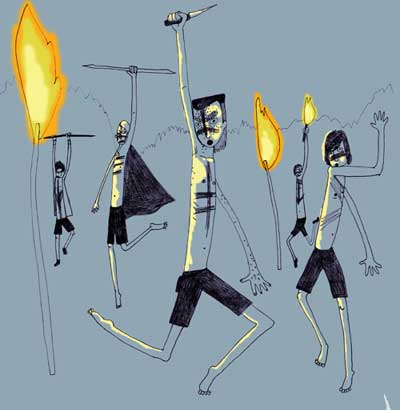
Guns (fear and unintended consequences). Institutions where expectation of conformity over-rides common sense (and all kids learn to do is take tests). Plus the "Lord of the Flies" mentality on the playground = current school situation and cements my decision to do a different thing!!
Over. It.
Thursday, March 28, 2013
Creating the environment
Reorganizing and decluttering continues. Got a new desk to better handle the "business" of the family (including the homeschooling aspect). ALSO got a new position where I get to work from home (at my new desk), which allows me to be home and more available to the kiddos and their home studies.
Additionally, I've been mentally planning our extra garage space room conversion to a nice outdoorish sorta of space where the kiddos can be loud(er), more creative, and can engage in crafts, paints, and also have an additional space in which to study. I would LOVE to obtain more shelving and create library of sorts in this space as well.
First thing's first. We have to relocate the animals that occupy the space.
We rescued a stray puppy 1 year ago. How do you NOT take a puppy, under the circumstances? Give it a go. But here we are, a year later, and I realize that the family is not too keen on this dog. No one walks the dog, or loves on the dog. The dog stays in the crate, our out in the yard alone. THEN, in her boredom, she barks incessantly at random nothing...irritating the neighbors who subsequently call the cops!!
I've been conditioned to immediately respond when the dog starts barking. And back into the crate she goes!!
Maybe because of the type of dog she is...or maybe because the lack of family interaction...the dog doesn't even come to us when we call her. She sits and acts like she doesn't know who we are. I took her to a dog park, out running, out the gate, and she just fails to even acknowledge the person calling for her.
She's not aggressive at all. And she's actually a great dog.
Just not for our family.
And they all know it.
So I found another family for her.
And now, we can focus on converting our room, decreasing distractions (imagine the huge distraction a barking dog, cops, and a frantic mom are to home-schooled kids!!) and reorganizing - creating a more ideal family situation for home-learning.
Labels:
environment
Tuesday, March 26, 2013
To Reed? Rede? Or Read?

"ee" sound is represented by:
ee (as in need)
ea (as in read)
y (as in baby)
e_e (as in here)
It's NO WONDER that kids can't spell!
...therefore, I've been reading Reading Reflex to help me institute our remedial reading program. I'm completely done with the introduction and the "Getting Started" section, which was helpful and enlightening (albeit a bit repetitious for my taste).
While I appreciate the emphasis on recognizing and appreciating that the letter symbols represent sounds (and not vice versa), I really didn't need her to spend an entire chapter making that point. Also, I tend to not like it when authors spend an excessive amount of time explaining why their way is "right." If I didn't believe in the method...I wouldn't have purchased the book. And while I appreciate her offering an explanation (and giving some real life examples of real clinic patients and personal situations), again, an entire chapter is just too much time dedicated to this aspect - especially when I'm just eager to get to the nitty-gritty and start remediating my child(ren).
So I have *finally* arrived at Chapter 3 (and there are only 6 chapters in this 350+ page book!) - Teaching the Basic Code. There are a few "pre-tests" and "simple" exercises in this chapter that I just HAD to try out on the children. To my delight, both my 1st grader and 5th grader actually intellectually understand the crux of the premise: letters are symbols that represent sounds. And there are many symbol combinations that can represent the same sound.
And to my delight, my pre-k was able blend sounds into words!!
So now I'm going to go thru the chapter in an attempt to find a "good" starting place for both Ian and Haley (since they are the two who will undergo this homeschooling process first).
Tuesday, March 19, 2013
Spanish victory

In preparation for more academic home-learning, Haley and I sat down to do a lesson...
...in Spanish!!
Our session was about an hour (longer than I anticipated but Haley was determined to "learn how to say something in Spanish" THAT night!!) And in her eagerness, she became impatient. I think she felt like she had my attention for only 10 minutes...and whatever she didn't master after 10 minutes would have to "wait until next time." OR perhaps *I* would "get bored" or "discouraged" with her perceived lack of knowledge...and call it quits for the day.
And she REALLY wanted to "learn *something*" that day.
When we sat down, my idea was to teach her the basic idea of verb conjugation of regular verbs. We went over "what a verb was" and the conjugations in English. Then easily enough I explained the conjugation of 'hablar'
I - yo - o
You - tu - as
He/her/you - el/ella/usted - a
We - nosotros - -amos
They/you all - ustedes - an
She couldn't/wouldn't just memorize the various forms. She had to know "why" and "what happens when" and "what if I want to say...." Which is excellent, but was beyond the scope of what I was ready to teach at that moment. I thought we'd sit down, and she'd memorize the above 5 lines...and that's it.
Her thoughtful questions took us on various tangents...
...and somehow we ended up *also* learning the Spanish alphabet as well.

After a few tears (hers) and a rising desperation (mine). I explained to her that we could work on this for as long as she wanted to. She would be the rate-limiting factor...not me. I stayed focus on the end-goal, and reflected back to my childhood home-learning days....
I recall feeling frustrated when I didn't understand adding fractions in the 5th grade. I had a teacher (Mrs. Duvall) who didn't think I was very smart...and to "show her" that I "belonged in the smart kid group" I
So without teaching a single lesson in fractions (not one) she assigned me (only me) an entire page from the back of the math book. I accepted the challenge proudly. Got home. Had no idea what a fraction was!! (Crazy in 5th grade to not know what a fraction was, right?).
I remember crying as my mother tried to explain it. (I had accepted a challenge, afterall. There's NO WAY I could go back with my face in my hand and ever proclaim my intelligence, EVER, if I couldn't even master 5th grade math!!). So when I didn't immediately understand, I felt like I would 'never get it'...that perhaps I was somehow not capable of understanding. And...my educational journey would come to a screeching halt at that moment of confusion. And I'd be relegated to the throes ignorance forever...and ever...
...and I'd live on the streets. And never amount to nothin'...
But my mother persisted. Maintained composure and told me "if you keep crying, I can't show you how to do it." So I stopped crying. And I learned how (and why) to find common denominators in 1 night...so I could go to school the next day a shining (intelligent) star.
Take THAT Mrs. Duvall!
(Back to Haley)
After our hour, Haley learned a basic Spanish exchange, the alphabet, and the sounds the letters make. She knew how to conjugate a verb...and understood the idea that an adjective comes after the noun in Spanish. And she was happy. And I am excited that she could learn so much in such a short time from me...in a subject in which I'm no master!! That renewed my confidence that together, we could make it thru.
Sunday, March 17, 2013
Hana ENFP
Extravert, Intuitive, Feeler, Perceiver
Top Ten Words That Describe Most ENFPs:
Sensitive ... Visionary ... Casual ... Idealistic
Energetic ... Spontaneous ... Imaginative
IDEA GENERATORS, FUTURE-FOCUSED
ENFPs are “idea generators” much more than they are “detail people.” Often ingenious designers of “win-win” solutions that have a long term positive impact on people, ENFPs are a continuous source of “out of the box” ideas. Exceptionallyoptimistic, ENFPs more than any other type believe that everything is possible. There are two phases of most projects or meetings: 1) the initial “big picture,” “vision setting” stage; and 2) the logistics or “action items” stage. Innovative visionaries, ENFPs shine during the former, gaining much more energy from envisioning future possibilities and idea generating then from completing concrete tasks. They tend to lose steam toward the end of projects when everything is decided and only the final execution steps remain, particularly when this involves handling details. ENFPs report that remembering random specifics is not a natural gift. As a result, they tend to rely heavily on copious note-taking for things like “action items” and logistics.
INSTANT RAPPORT, HIGH ENERGY
Insightful, humorous, and highly energetic with “the gift of the gab,” ENFPs as a group tend to develop rapport with others faster than any other type. They intuitively “get” what makes others tick, and then swiftly and naturally adapt their approach accordingly. Their exceptional social skills, genuine warmth, passion, and infectious enthusiasm draw others to them. They spend a great deal of time connecting on a “personal level” in their work relationships, and maintaining a large professional network. ENFPs are “people” people who become drained by long stretches of time working alone. They need the stimulation of a collaborative environment to feel energized and to be able to “fire on all cylinders.” ENFPs think best out loud, and generate ideas most easily in group brainstorming sessions.
EMOTIONALLY INTELLIGENT, SENSITIVE
Staggeringly perceptive, ENFPs are one of the types MOST highly attuned to the emotional reactions of others (and their own feelings as well). Their insights into the emotions at play and motivations behind behavior are usually amazingly accurate. They naturally put others needs before their own, and often go well out of their way to maintain harmony in their relationships. ENFPs develop thicker skins over the course of their career, but generally they tend to take criticism personally, and may read more into feedback than was intended.
EMPATHETIC, GENEROUS, INSPIRATIONAL
Generous and empathetic, ENFPs have a special gift for leaving others feeling inspired and valued for their unique gifts. ENFPs naturally provide energetic support, appreciation, and positive feedback to others. As people who “aim to please,” ENFPs feel a surge in motivation when they themselves also receive regular and genuine compliments. ENFPs love to inspire others to gain a new perspective and reach their maximum potential. As the MOST idealistic type, they would rather err more on the side of giving others the benefit of the doubt, and thus usually meet others well more than half way.
CASUAL, SPONTANEOUS
Flexible, casual, spontaneous, and easy going, ENFPs love surprises and tend to leave their options open as long as possible. ENFPs might struggle a bit to stay organized, and they can be easily distracted from the task at hand.
Top ten: ENFPs are the type MOST likely to . . .
- 1. Develop instant rapport with a stranger
- 2. Find that others readily share personal information with them
- 3. Decide by involving others; value consensus
- 4. Be seen as optimistic, idealistic and emotionally intelligent
- 5. Follow their “gut” or hunches without concrete facts
- 6. Build consensus
- 7. Create a collaborative, team environment
- 8. Be able to adapt their style to each situation or person
- 9. See life as a fun adventure with endless possibilities
- 10. Be a celebrity musician, talk show host, or theater actorhttps://type-coach.com/types/all
Labels:
Personality
Ian ISFP
.jpg)
Introvert, Sensor, Feeler, Perceiver
Top Ten Words That Describe Most ISFPs:
Kind ... Private ... Observant ... Reserved
"In the moment" ... Quiet ... Unassuming
Sensitive ... Free-spirited ... Spontaneous
QUIET, PRIVATE, MODEST
Reserved, intensely private, and unobtrusive, it can take
many encounters to get to know the incredible warmth, generosity, kindness,
playful humor, and often impressive skill set of an ISFP. First impressions do
not do them justice; ISFPs are the type least likely to “advertise” their own
strengths. They are one of the mostsympathetic types who genuinely care about
and enjoy people. However, being in highly social environments tends to drain
their energy - they crave time inside their own head to process and recharge.
As one of the least talkative types, ISFPs share a very small percentage of
their opinions, concerns, or decision- making process. They tend to enjoy
working behind the scenes in supportive roles that help people in concrete
ways.
DETAIL-ORIENTED
Blessed with the gift of an exceptional memory for facts,
trivia, events, and conversations, ISFPs are able to remember specifics better
than most. Highly practical, realistic,
and action- oriented, ISFPs are much more inclined to “just do it” – rather
then talk about it – and have a low interest in theory, analysis, future
prediction or abstract discussions. They naturally excel at handling logistics
or concrete tasks in the smoothest, most elegantly efficient way possible, with
the least amount of complexity or wasted time.
SENSITIVE, KIND, PERCEPTIVE
Staggeringly perceptive, ISFPs are one of the types MOST
highly attuned to theemotional reactions of others (and their own feelings, as
well). Their insights into what others are feeling are usually amazingly
accurate. Highly averse to conflict or tension, ISFPs focus a lot of energy on
maintaining harmony and avoiding confrontation. As one of the more sensitive
types, ISFPs take criticism very seriously (and often to heart), and tend to
withdraw, not engage. Intensely private, they are the least likely type to
share that they had a negative or hurt reaction, leaving others totally unaware
of the damage done.
SPONTANEOUS, CASUAL
Spontaneous, casual, and comfortable with “winging it,”
ISFPs often do their best work last minute with the pressure of the deadline
upon them. Others find their easy going, relaxed style infectious. Calm, cool,
and collected (at least on the outside) in a crisis, they are able to leap into
action and efficiently troubleshoot when other types might be frantic. ISFPs
are some of the most patient, flexible people, with a free-spirited,
independent style. With a “live and let live” attitude, ISFPs are perhaps the
least likely type to judge others, or try to offer unsolicited advice. ISFPs
tend to becollaborative leaders, with very little impulse to take control or
credit.
DRIVEN BY PERSONAL VALUES, KIND
ISFPs have strong personal values, and while they do not
discuss them much with others, they have a large impact on the ISFP’s actions
and decisions. They seek to feel that they are living their lives in accordance
with their values and what “feels” rightto them. ISFPs care deeply about
people, seeing something positive in everyone. They take great pleasure in
tangibly contributing to the well-being and happiness of others.
OBSERVANT, KINESTHETIC
Keenly observant of their physical surroundings while living
fully in the moment, nothing gets past an ISFP. They have excellent sensory
awareness, and trust most what they can see, smell, taste, touch and hear.
ISFPs are kinesthetic, “hands on” learners, who much prefer to learn by
physically “doing,” as opposed to reading or listening. They also tend to have
a creative streak and a great sense of aesthetics.
Top ten: ISFPs are the type MOST likely to . . .
1. Be sensitive to criticism
2. Tread lightly with others, particularly with sensitive
topics
3. Be humble and modest, hardly ever "self
promote"
4. NOT insult or upset others
5. Avoid conflict, or even tension
6. Desire a job outdoors
7. Not gravitate toward a desk job in the corporate world
8. See the best in others
9. Dislike public speaking
10. Not express negative opinions
https://type-coach.com/types/all
Labels:
Personality
Saturday, March 16, 2013
Haley ENTJ
Extravert, Intuitive, Thinker, Judger
Top Ten Words That Describe Most ENTJs:
Take Charge ... Bold ... High-Energy ... Strategic ... Proactive
Confident ... Assertive ... Innovative ... Decisive ... Tenacious
ENTHUSIASTIC, CHARISMATIC, TALKATIVE
Enthusiastic, direct and charismatic, ENTJs are one of the
most high energy,talkative types. They are typically very comfortable sharing
about their lives and are much more likely than their INTJ colleagues to “think
out loud.” Highly articulate, ENTJs have a naturally bold and dynamic presence
that tends to command the attention of the room. Often their tremendous outward
self confidence and excellent verbal skills draw others to them, but can at
times overpower or intimidate certain personality types. ENTJs are the type that have to work the
hardest to not interrupt others (usually in an effort to fight for “the floor”
or avoid hearing excessive details).
INTELLECTUALLY CURIOUS, DEBATE TO UNDERSTAND
ENTJs have a strong need to be constantly learning and
challenging themselves. They thrive when they are continuously working towards
higher levels of competency, and are easily bored by assignments or tasks that
they have mastered. Intellectually curious, ENTJs learn by challenging others’
positions, expecting them to defend their positions for the benefit of better
understanding both sides. They tend to respect others who can argue their
position.
BIG PICTURE PROBLEM SOLVERS
There are two phases of most projects or meetings: (1) the
vision and strategy-setting stage and (2) the execution stage. Unlike their
ESTJ colleagues, ENTJs tend to gravitate towards the former. Highly future
focused, out-of-the-box, logic-driven thinkers, few can match the ENTJ’s
capacity when it comes to doing what they love - developing long-term
strategies or solving complex problems that involve a lot of moving pieces.
ENTJs’ minds are unconventional and unrestricted by previous approaches or
traditional thinking.
STRATEGIC VISIONARIES
ENTJs are driven more by logic than personal values. They
don’t necessarily check in with their own emotions when making decisions, and
can at times overlook others’ emotional reactions. Strategic visionaries, ENTJs
excel at objectively analyzing and planning for the long-term needs of an
organization. Much less sensitive than their ENFJ colleagues, ENTJs usually
would rather be “right” than be “liked,” and can be very direct (to the point
of being blunt). They tend not to “sugar coat” their feedback or reactions as
much as other types, in order to not detract from the clarity of message.
PERFECTIONISTIC, FOCUSED, "TAKE CHARGE"
ENTJs drive for closure quickly and are some of the very
fastest decision makers on the planet. “Good enough” is not typically part of
the vocabulary of an ENTJ. They have
extremely high standards for themselves, as well as a tremendous stamina forhard
work. ENTJs tend to hold others to the same high standards and work ethic that
they expect from themselves. As one of the most proactive of the 16 types, they
don’t wait for it to all “work out”…they MAKE it all work out! ENTJs constantly
push themselves to achieve excellence in all of their endeavors, which often
translates into long hourswith more focus and fewer breaks in concentration
than most other personality types.
Natural born leaders, ENTJs have no problem taking charge in a group of
people without a leader, even among new people or environments.
Top ten: ENTJs are the type MOST likely to . . .
1. Fight for the
floor
2. Be a workaholic
3. Be seen as
assertive, bold and/or confident
4. Have LOTS of
energy
5. Move up the
corporate ladder quickly
6. Make big decisions
quickly
7. Finish others’
sentences
8. Become impatient
with a lot of detail
9. Be a natural-born
leader
10. Intimidate or overpower others
https://type-coach.com/types/all
Labels:
Haley,
Personality
Daddy INFP
Top Ten Words That Describe Most INFPs:
Sensitive ... Caring ... Empathetic ... Flexible ... Casual
Spontaneous ... Reserved ... Modest ... Calm ... Unique
UNIQUE, CREATIVE, UNCONVENTIONAL
There’s no doubt about it, INFPs are unique. They lead their
lives according to an inner compass that can often lead them off the beaten
path and in their own direction. INFPs are also gifted with a creative spark
that allows them to generate new, unconventional and even revolutionary ideas.
Their thoughts and ideas are frequently focused on people, and they have an
easy time relating to - and understanding - their fellow human beings. In fact,
INFPs often appear to have an x-ray vision into the inner-workings of other
people. Most successful INFPs attribute success to an innate ability to flex
their style to meet others more than halfway. This makes them naturals at
effective communication, and they are usually considered to be excellent
listeners – rarely judging, just seeking to understand.
BURSTS OF INSPIRATION
Flexible, casual, spontaneous and easy going, INFPs like to
leave their options open as long as possible. It is not uncommon for them to
struggle to stay organized, and they can be easily distracted from the task at
hand. Luckily, they actually prefer to
prepare rather last minute when the urgency is high. INFPs tend to work in
bursts of inspiration and take a lot of mini-breaks, rather than steadily
throughout the day or week. They tend to be very flexible and open to changing
plans last minute.
IDEA GENERATORS, VISIONARIES
INFPs are “idea generators” much more than they are “detail
people,” and they love to discover “win-win” solutions that have a long- term
positive impact on people. There are two phases of most projects or meetings:
1) the initial “big picture,” “vision setting” stage; and 2) the logistics or
“action items” stage. Innovative visionaries, INFPs shine during the former,
gaining much more energy from envisioning future possibilities and idea
generating then from completing concrete tasks. They tend to lose steam toward
the end of projects when everything is decided.
DRIVEN BY PERSONAL VALUES
INFPs have very strong personal values, which have a large
impact on their actions and decisions. They seek to feel that they are living
their lives in accordance with their values and what “feels” right to them.
Unlike their INTP colleagues (who are exceptionally logic driven), INFPs are
uncomfortable making decisions based predominantly on impersonal, logical
analysis. INFPs trust their hunches more than most, and have a tendency to read
between the lines of what others are saying more than any other type.
CALM, RESERVED, SYMPATHETIC
INFPs tend to have a relaxed outward appearance that has a
calming influence on others. Reserved and modest, INFPs are not likely to
“advertise” their own strengths, and it can take many encounters to get to know
them. First impressions do not always give a sense of their incredible warmth,
generosity, and kindness.
DEEP INNER WORLD
Inside the mind of all INFPs is a rich, well-developed inner
world that they tend to keep rather private. They are one of the most
sympathetic types, who genuinely care about and enjoy people, and strongly
value their relationships. Being in highly social environments tends to drain
their energy, and they crave time inside their own head to process and
recharge. With those in their “inner circle,” INFPs show a much more talkative,
passionate, and enthusiastic side.
Top ten: INFPs are the type MOST likely to . . .
1. Read between the lines
2. Have a “sixth sense” at times
3. Follow their hunches; make decisions based on what
“feels” right
4. Value uniqueness and originality in themselves and others
5. Reflect on who they really are, and on the meaning and
purpose of life
6. Do work that has personal meaning for them and betters
others’ lives
7. Have a calming influence on others
8. Not follow “the pack”
9. Enjoy an assignment with maximum creative license
10. Give others the benefit of the doubt
https://type-coach.com/types/all
Labels:
Personality
Subscribe to:
Posts (Atom)
.jpg)
.jpg)
.jpg)